
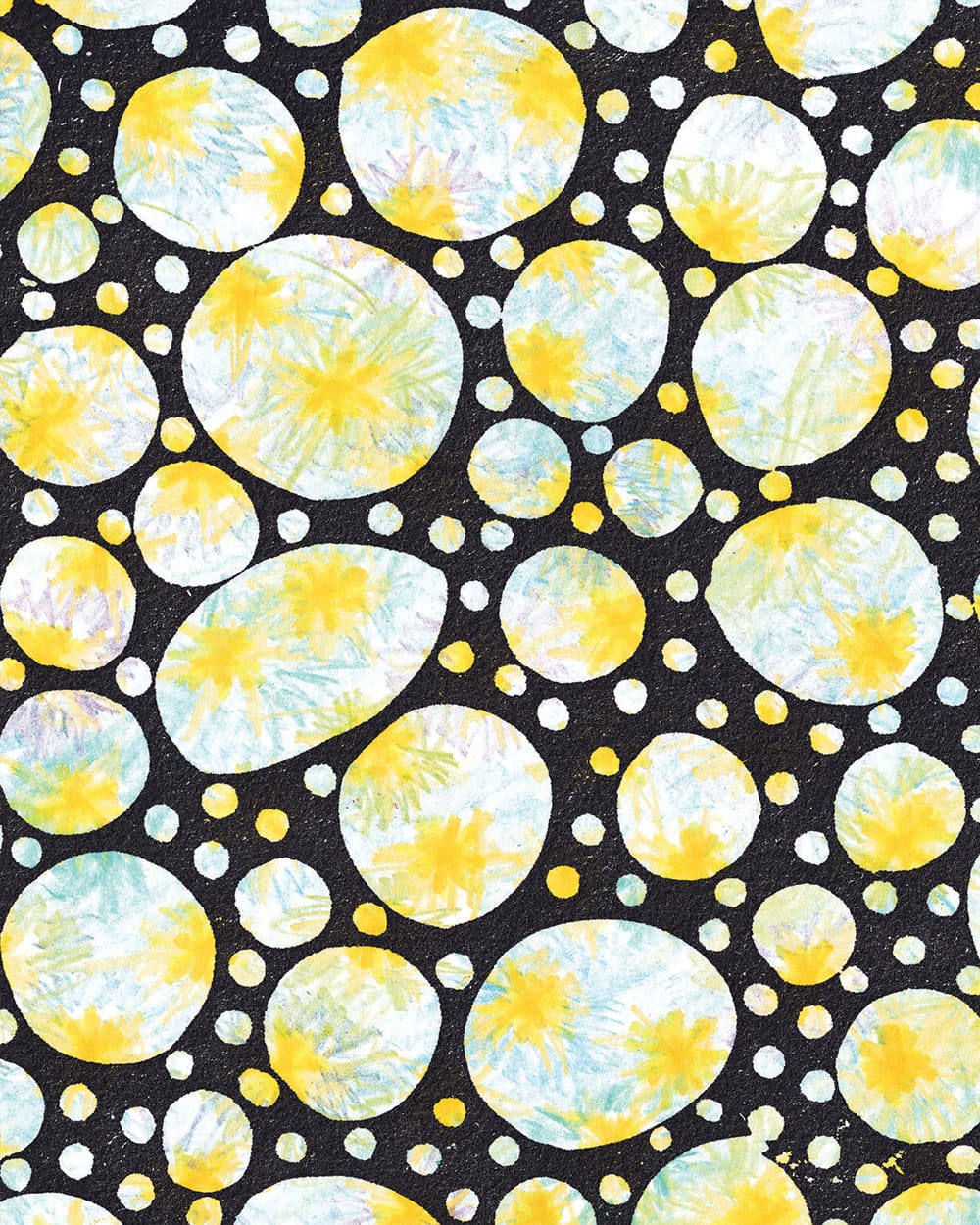
Delighted by You Collection · Delighted by Dandelion by Night
22 995 Ft
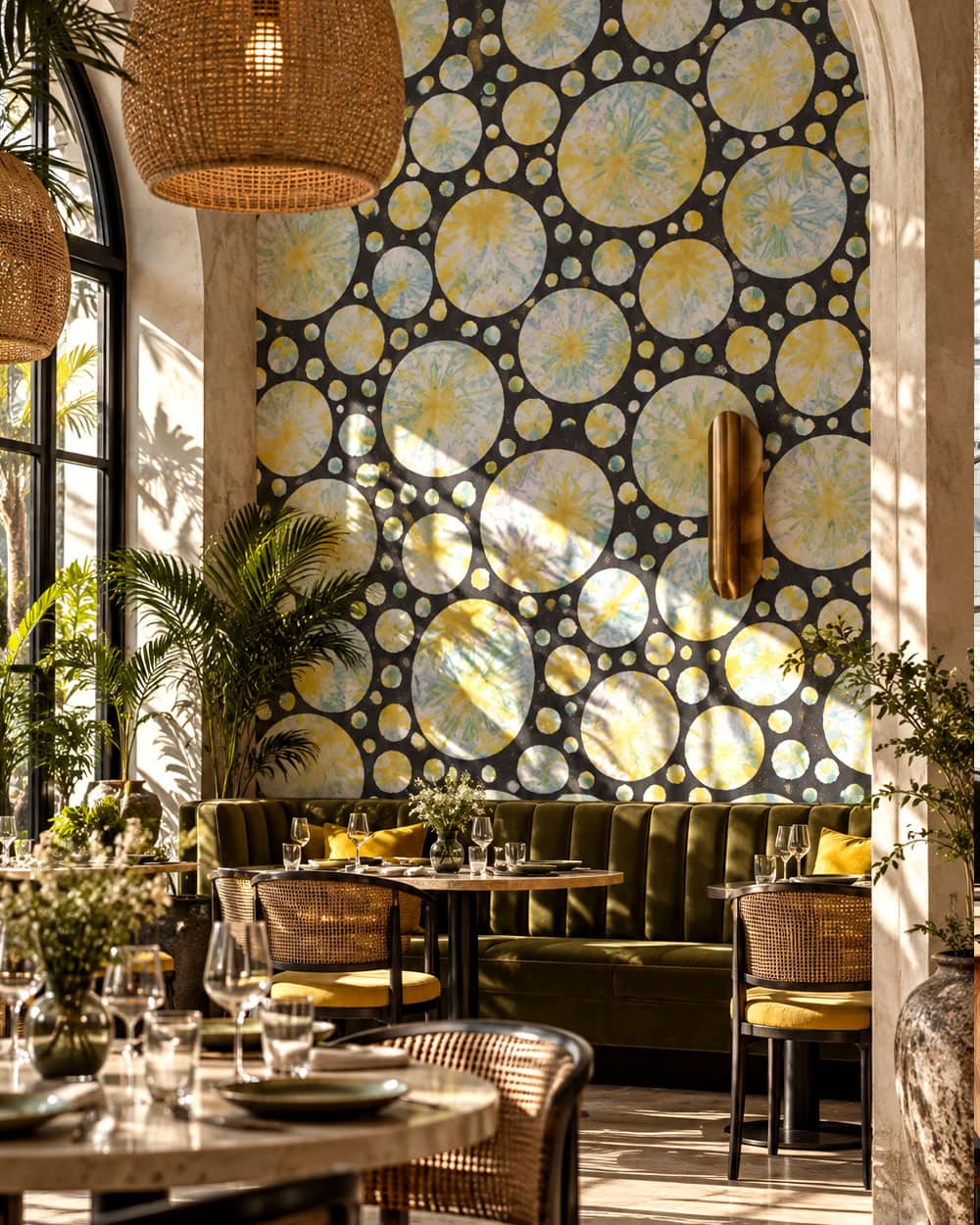
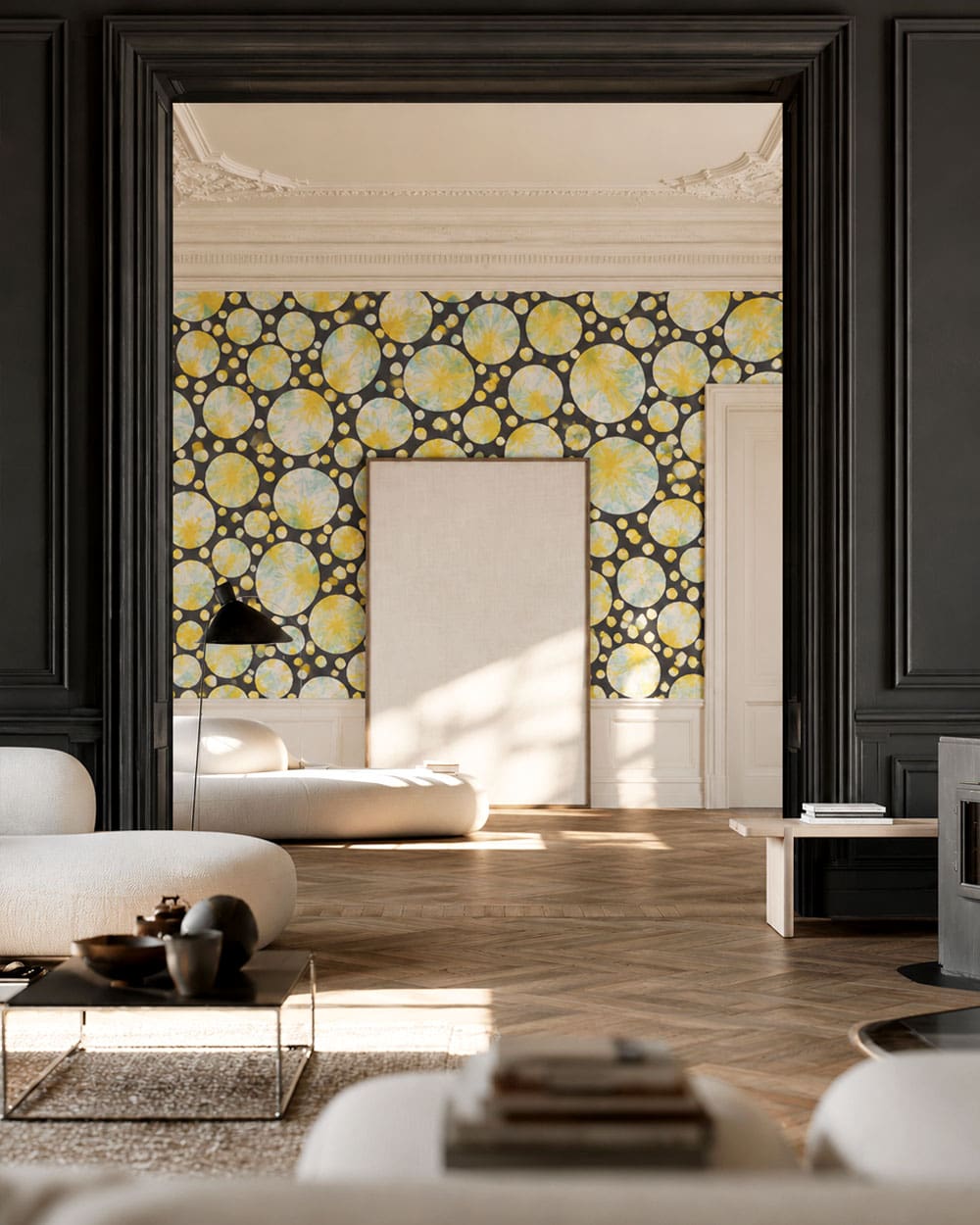
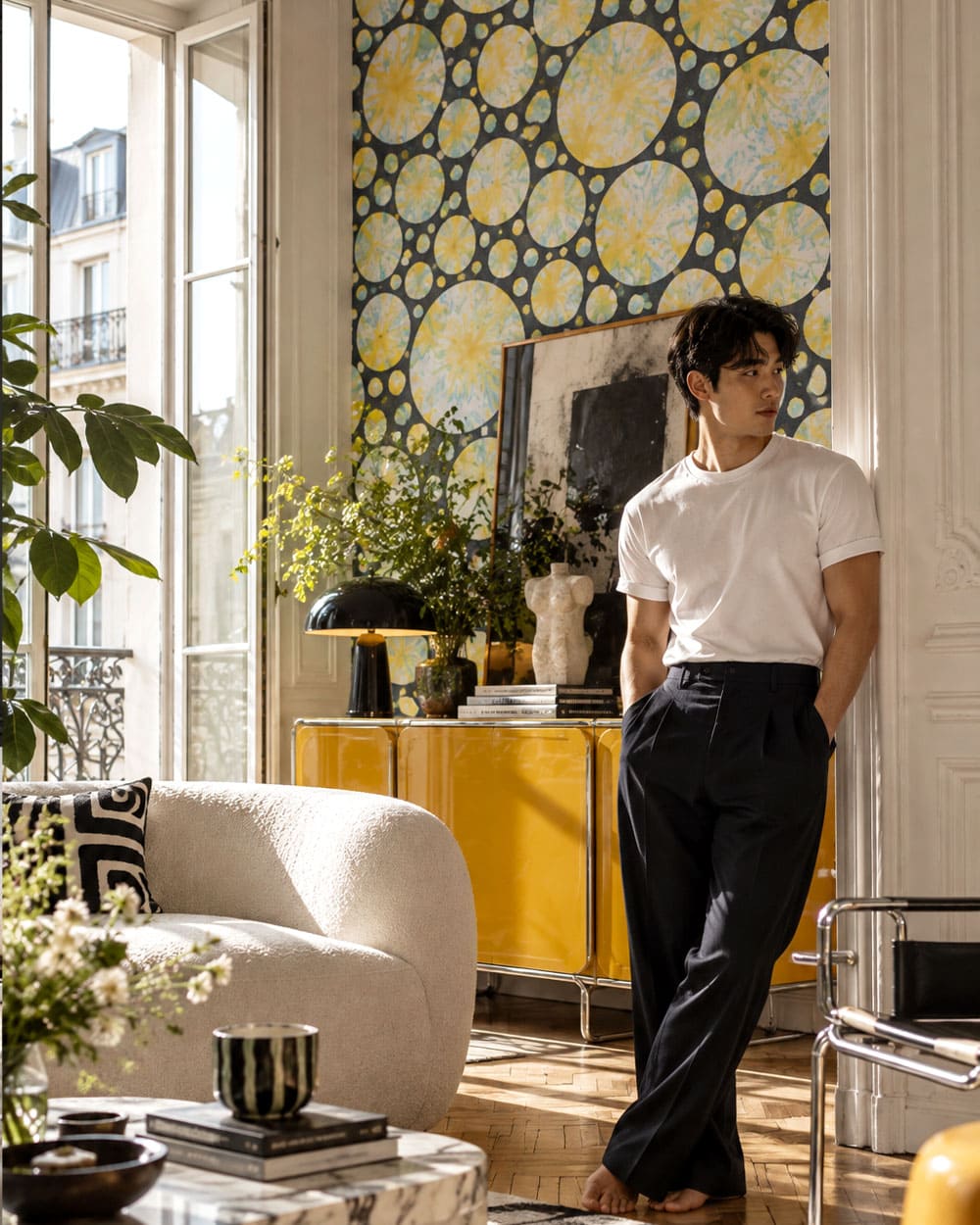
Tie Dye Wallpaper takes the irregular circles, colour variations and slightly unpredictable edges associated with resist-dyed textiles and translates them onto a wall. The attraction is precisely that the shapes don’t look mechanically perfect. Colour appears to bleed, fade or gather differently from one area to another, giving the pattern some of the movement of dyed fabric. That makes it particularly interesting in contemporary interiors. From a distance, the circles create a strong graphic rhythm; closer up, their softer pencil-like marks and variations begin to appear. Against black, pale yellow, blue and green become almost luminous. It sits somewhere between textile, drawing and graphic pattern — which is probably why it refuses to behave like conventional polka dots.
There isn’t one single birthplace. Resist-dyeing — protecting parts of a textile so that dye cannot reach them — developed in different forms across cultures, long before the psychedelic T-shirts most of us now associate with tie-dye. Japan has an extraordinarily sophisticated tradition called shibori. The Metropolitan Museum of Art describes kanoko shibori, in which tiny sections of fabric are twisted, compressed and individually bound before dyeing. When released, the protected areas form small irregular marks. Eighteenth-century garments covered entirely in kanoko could be extremely labour-intensive luxury objects. The Metropolitan Museum of Art West Africa developed its own remarkable resist-dye traditions. The V&A’s collection of Yoruba àdìrẹ textiles shows indigo cloth created through tying, folding, stitching and other resist techniques. These textiles demonstrate something important about tie-dye: apparent spontaneity can actually involve considerable control and craftsmanship. Victoria and Albert Museum .So tie-dye didn’t begin with the 1960s. The 1960s simply gave it a very memorable wardrobe.
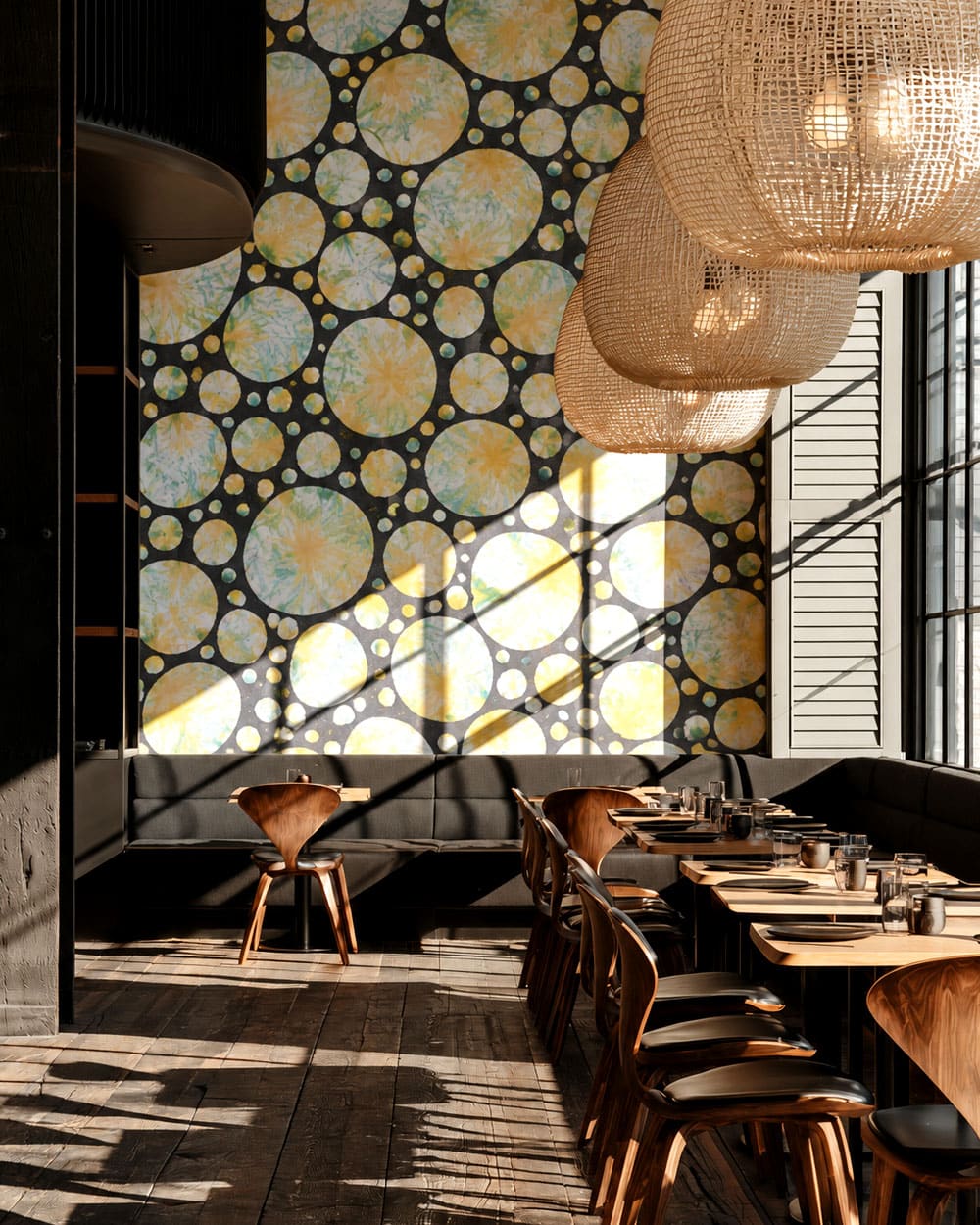
Absolutely — but don’t decorate around it as though the room itself has to become tie-dyed. The easiest approach is contrast. Against an organic pattern, introduce furniture with a clear silhouette: a beautifully shaped wooden dining chair, a long black banquette, a restrained sofa or a substantial timber table. Natural materials such as walnut, oak, cane, linen and stone give the irregular pattern something quieter to sit against. The black background of Tie Dye Wallpaper also changes the character considerably. Rather than feeling sugary or festival-like, pale yellow, muted blue and green circles become more graphic and architectural. The image above is a good example of why this works: the wallpaper is playful, but the room doesn’t need to be. Dark joinery, sculptural timber chairs and oversized woven lights give all those circles some grown-up company.
Because rooms are mostly built from straight lines.Walls meet floors at right angles. Doors, windows, cabinets, tables and shelving usually reinforce the same geometry. Introduce circles and suddenly that architectural grid has something to push against. The effect becomes even more interesting when the circles aren’t perfect. In Tie Dye Wallpaper they change scale, overlap visually and contain their own irregular markings, so the eye doesn’t read them as a rigid geometric repeat. Large circles establish the rhythm while tiny ones fill the spaces between them. That mixture of repetition and imperfection is what keeps the pattern moving. Too much order can make a room feel static; too much randomness can make it chaotic. Somewhere between the two is usually where things get interesting.
| Colour | Fekete |
|---|---|
| Room | Dining Room, Living Room, Office |
| Style | Contemporary, Maximalist |
Vélemény írásához lépj be előbb.






Értékelések
Még nincsenek értékelések.