Press Kit
Too bold
for beige.
by Barbara Barcsik · Learn to trust your boldest design decisions.
We're so glad you found us. This is the official press kit for Too Bold for Beige, a contemporary interior design book. We've gathered materials to help you write about the book or simply get to know it better.
- About the bookShort and extended descriptions, key facts and ISBNs
- Look insideSelected spreads and the table of contents
- Meet the authorA short bio and a Q&A with Barbara Barcsik about the book and what it takes to trust your own taste
- Press downloadsThe book cover, selected spreads and press photographs
The book was first published in Hungarian as Nem bézsnek való vidék and was warmly received by readers in Hungary. The English edition is now available from booksellers in 14 countries and on Amazon.
You're welcome to use the downloadable materials in editorial coverage with the supplied credits. You may also quote from the Q&A with attribution to Barbara Barcsik.

Or ask for it at your local bookshop:
ISBN 978-615-02-4995-7 (hardcover)
Promo videos & social
Watch & share.


The Too Bold for Beige promo video is on YouTube.
Free to embed in your article or blog post. Open it on YouTube and choose Share, then Embed.
https://www.youtube.com/watch?v=0ywLgW01Wy4
About the book · copy freely
A book about interiors, taste and self-knowledge.
In Too Bold for Beige, artist and Vesper Royale founder Barbara Barcsik explores the relationship between interiors, personal taste and self-knowledge. Across 346 pages and more than 340 illustrations, all her own work, she brings together practical guidance, candid reflection and a vivid, often unexpected visual world.
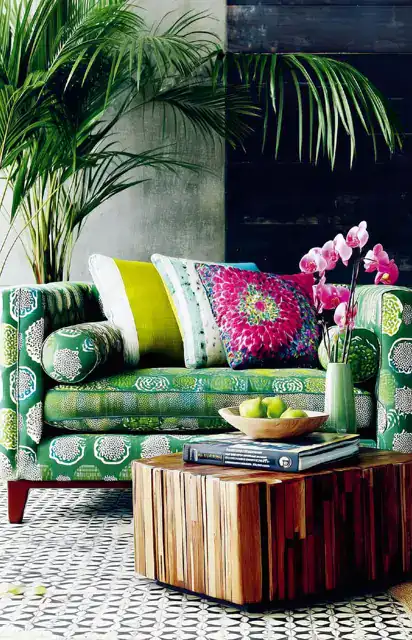
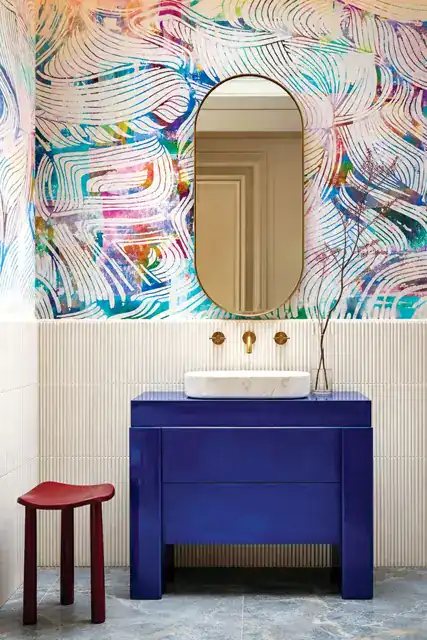
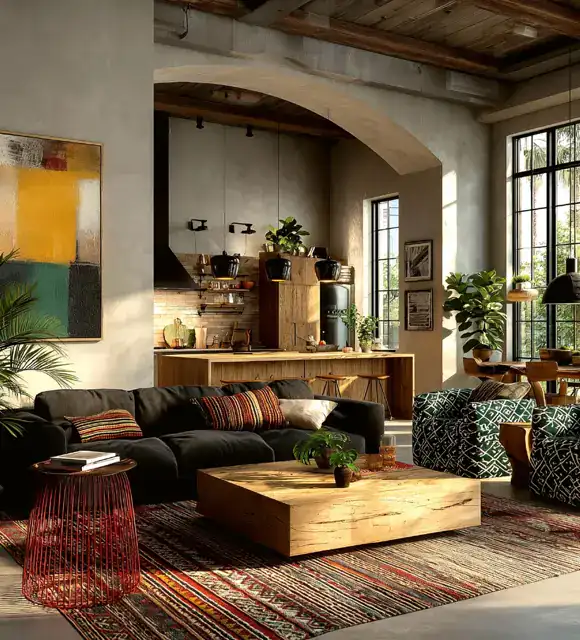
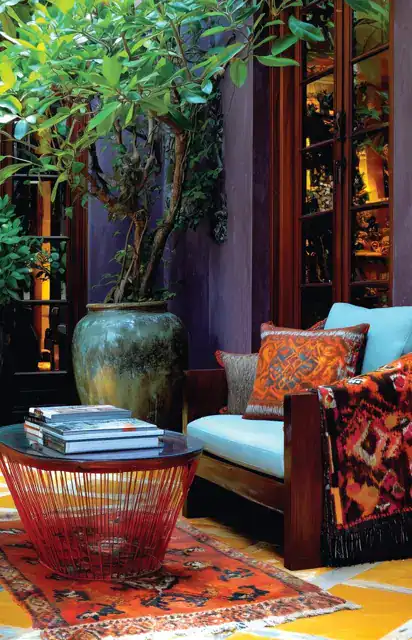
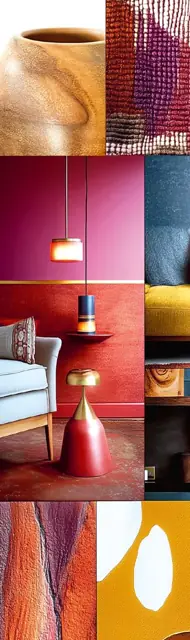
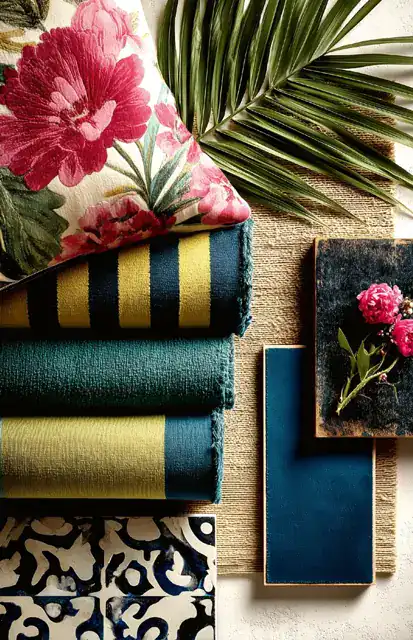
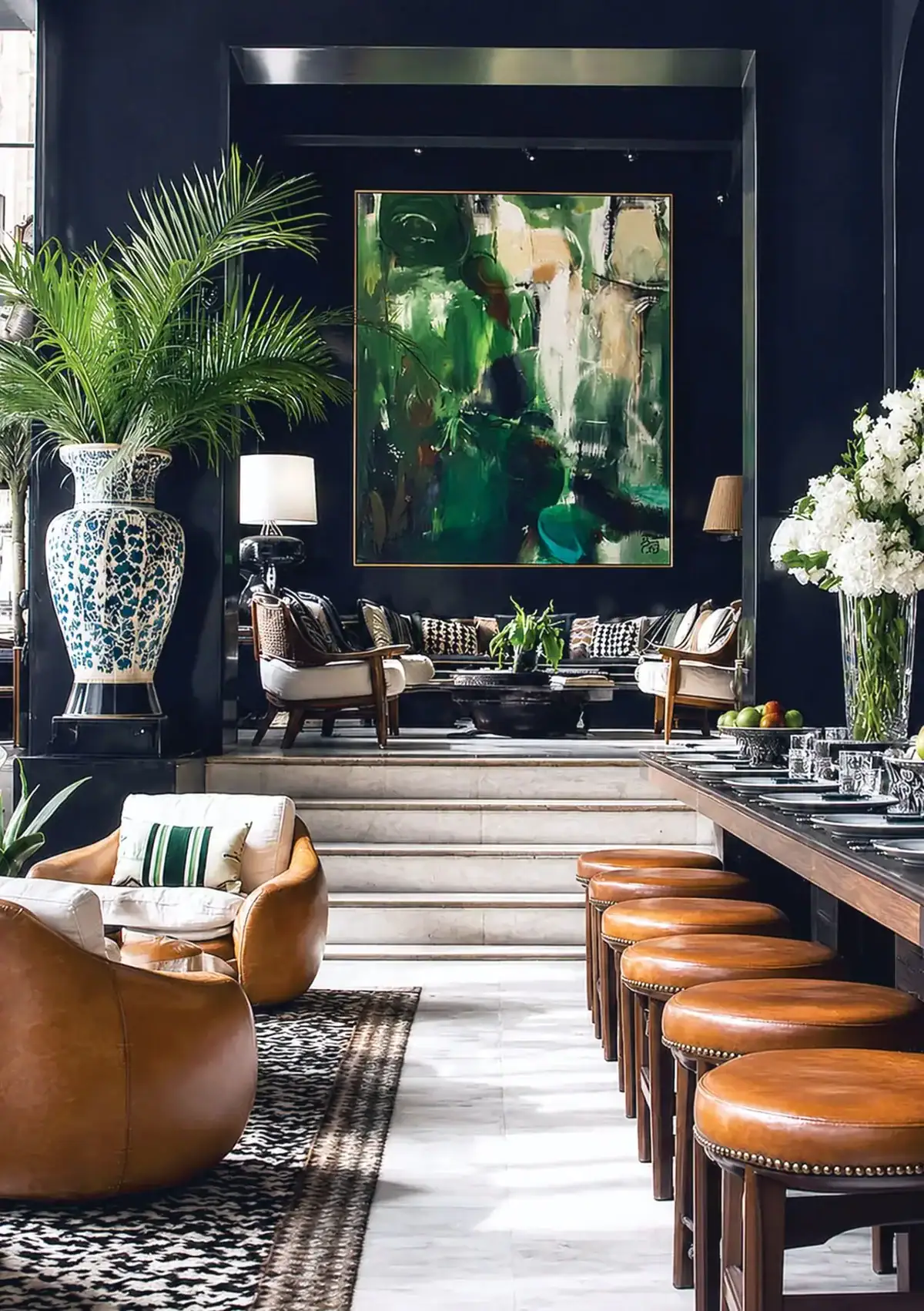
The images are deliberately extraordinary. Barcsik consciously chose not to show predictable, everyday interiors. Alongside her own wallpaper designs and limited-edition prints, the book features idealised interior visualisations created in her creative studio, where AI is a deliberate visualisation tool across interior, website and social media projects, each one refined by hand in Photoshop over hours of work. These rooms are not blueprints to copy but provocations, designed to make readers ask whether they, too, could allow themselves the same freedom with colour, and which colours would truly speak for them.
The subtitle, Learn to trust your boldest design decisions, captures the book's central invitation: to understand what draws you to a colour, an object or a composition, and to develop the confidence to follow that understanding through. Boldness might mean choosing an unexpected pattern, keeping an unconventional heirloom, or committing to a restrained room.
The original Hungarian edition, Nem bézsnek való vidék, was warmly received for its distinctive starting point: understanding yourself before deciding what your home should look like. Readers responded to its warmth and directness, the feeling of a conversation with a friend.
Barbara's perspective bridges two professional worlds. After more than a decade as a tax lawyer in international advisory, she turned to art and design, translating her ideas into artworks, wallpapers and physical spaces. The structured thinking of her earlier career now helps her make an expansive, often elusive subject tangible.
That combination gives the book its particular rhythm: concise, purposeful writing set against an abundance of colour, pattern and artistic experimentation. Personal questions lead to practical observations, helping readers recognise their own preferences and notice when the fear of getting it wrong has started making their choices for them.
Too Bold for Beige treats decorating as a creative process grounded in self-awareness, curiosity and everyday life. Quiet rooms have their place here too, because quiet can have character.
Too Bold for Beige by artist and Vesper Royale founder Barbara Barcsik is a book about interiors, personal taste and self-knowledge. Its subtitle, Learn to trust your boldest design decisions, is its invitation: understand what draws you to a colour, object or composition, then follow it through. Across 346 pages, Barcsik combines practical guidance with candid reflection and more than 340 illustrations, all her own work. The original Hungarian edition was warmly received by readers. Boldness, here, can be an unexpected pattern, or a quiet room with character.
For anyone who has ever got lost in a sea of saved interiors: this 346-page, richly illustrated book helps you find what you really love, and design with confidence.


About the author
From tax law to linocut.
Barbara Barcsik is an artist and the founder and creative director of Vesper Royale, a creative studio in Budapest. After more than a decade as a tax lawyer in international advisory, she turned to art and design, and now brings the boldness of contemporary art to the spaces we inhabit and the worlds we encounter online.
A hand-painted design can set the mood for an entire room, while a brand's visual world can unfold across its website and social media. Clients seek her out when they want a design with a distinctive atmosphere and room for a little humour: work rich in colour and pattern, with an unexpected detail that makes you look twice. In the studio, AI serves as a deliberate visualisation tool across interior, website and social media projects.
Her wallpapers begin with original drawings, paintings and hand-carved linocuts. She develops these works digitally for production, preserving the marks and textures of the original artwork.
At Salon Frohner, a contemporary hair salon in a historic Budapest villa, Barbara designed both the reception desk and the abstract artwork behind it. She developed their colours, materials and forms together, treating the desk and the artwork as parts of a single composition.
That way of working, moving between making art and shaping interiors, informs Too Bold for Beige. The book invites readers to notice what draws them to a colour, a texture or an object, and to give those preferences more weight when making design decisions.
Barbara Barcsik is a lawyer turned visual artist and the founder of Vesper Royale, a Budapest-based designer brand known for bold, handcrafted wallpapers and murals developed from her own drawings, paintings and linocut prints. Through her creative studio she also works in branding, art direction, website and social media design, using AI as a deliberate visualisation tool. Too Bold for Beige is her first book.
Q&A with Barbara Barcsik, author of Too Bold for Beige
What you might want to know.
Free to use. Every answer below can be copied and quoted in your coverage, with attribution to Barbara Barcsik. Each answer has its own copy button.
Have a question we haven't answered? Get in touch, Barbara is happy to help.
Barbara Barcsik, artist and founder of the Budapest design studio Vesper Royale, on what inspired Too Bold for Beige, why we so often settle for beige, and how to trust your own taste at home.
What inspired the author of Too Bold for Beige to write this book?
When we launched Vesper Royale's first wallpaper collection, with bold, characterful statement walls, the response was wonderful. At interiors fairs we met not only decorators and interior architects but private homeowners too, and many of them stopped in front of a particularly striking pattern. I could see they loved it, and then, almost immediately, came the question: “But where would I put this at home?” That next step clearly troubled them, and even weighed on them a little. They wanted something, but didn't know how to get there.
I became fascinated by that moment, when we are instinctively drawn to something, then picture our own living room and start to doubt. I originally planned a series of articles for my website and my Substack about how to get past it, with practical steps that help in everyday life. The table of contents is essentially made up of those article titles. When I wrote the first article, which eventually became the first chapter, I could see the subject was strong enough to become a book.
The text came surprisingly quickly. I deliberately kept it concise and focused on the essentials, while the images were given room for lingering, for unexpected details and visual surprises.
How did the author of Too Bold for Beige go from tax lawyer to artist and wallpaper designer?
I danced classical ballet from the age of four until I was eighteen. Early on I learned how much can be expressed without words, and how much discipline it takes for a movement to finally look effortless. In tax advisory I also loved the precision of the work, and the way a complex problem can be solved step by step. In both, the same thing holds true: without a plan, a process and persistence, there are no results. Consistency is the key.
But as the organisation I worked for grew larger and larger, I increasingly missed personal connection. It was a slow process that took many years. Art first came close to me through collecting. I collected works by contemporary and twentieth-century artists, and studied art history along the way. Drawing and painting began as a way to unwind, a kind of mindfulness practice, and then I found more and more joy in creating something myself.
How does the author's legal background shape the way she designs interiors?
Practical thinking, and the confidence to make decisions. Also a process-driven approach. Writing and publishing a book or designing an interior is always a project: you have to get from A to B, and create something out of nothing. You need to know which decision has to be made now, and which can wait until you can see more of the whole. I did that before, and in a way I still do it now, only now I create. Carrying a strong idea all the way through, until you can hold it as a book or walk into the finished space, is a creative task in itself.
Why do so many people choose beige and “safe” interiors, even when they love something bolder?
A characterful choice makes us a little more visible. That isn't easy, because there is vulnerability in it. There's the chance someone will walk into the room and say, “I would never have chosen that!” When we choose something with character, we are also saying: this is me. That is liberating and frightening at the same time.
In the book's title, beige isn't a colour. It's the moment when we dismiss our own enthusiasm with “that'll do”. That's why we need to learn to trust our gut reactions again, and notice when we say yes to something with the heart rather than the head. It takes time and inner work, because we ourselves keep changing, and we are influenced by our surroundings and by other people's opinions and expectations. It takes practice and patience, and sometimes it brings uncomfortable realisations. For instance, that interiors are not everyone's primary form of self-expression. And that is completely fine too.
“A characterful choice makes us a little more visible. That isn't easy, because there is vulnerability in it.”
Can a quiet, minimalist or pastel room still be bold?
Of course. For me, character doesn't necessarily mean strength or loudness. It means recognisability. I love delicate, pastel spaces in which you can still feel that someone knew exactly what mood they wanted to create. I enjoy it when a room lets you recognise how the person who designed it was thinking, and what they wanted to express.
The difference between visual noise and authenticity is whether there is an idea behind it. Dopamine decor is fashionable right now, but visual stimulation alone isn't enough. Don't just hang a colourful chandelier; be able to say why it's there and how it connects to the space as a whole. A gentle room can be a bold choice as well, as long as it isn't formulaic, as long as it doesn't feel like something we've seen a million times.
Why does Too Bold for Beige show idealised, extraordinary interiors instead of everyday homes?
I wanted to provoke the reader a little. I thought long and hard about including simpler, more accessible examples, but in the end I consciously chose a different path. That's why I allowed myself pairings, textures and scales that are hard to simply turn the page on.
I'd love readers, over a weekend cup of tea, to flip back to an image and notice something that escaped them the first time. Perhaps they will take away a single shade, and even that will make them see their own room differently.
How does the author of Too Bold for Beige combine handmade art and AI in her design work?
Most of my wallpapers begin on paper, as drawings, paintings or linocuts. I've tried digital drawing tools, but they always break my concentration. I work quickly and with momentum, and by hand it's easier to stay in the rhythm in which a composition and its mood take shape. I need that physical connection to materials. I then scan the work and refine it digitally for printing.
I use AI for things like quick interior sketches: if I have an idea, within seconds I can see in space whether it works. For a small studio, that is a huge freedom. It has opened doors that would have been out of reach without significant capital. I can try more directions, and spend on development the time that creating the first visual used to take. AI doesn't only help there; it supports my workflows too, from marketing and social media to the visual worlds of websites. If you have a vision and a recognisable visual language, and you put in the work, the sky's the limit.
How can you find your own interior design style? The author's advice for beginners
Give yourself a little time before you start buying, and learn to respect your own design decisions. Notice which inspiration image you keep coming back to days later, and what it is about that image that really holds you. You may have saved a whole room, when what you actually love is the pairing of a blue wall and dark wood.
A sale or a special offer can easily make a decision for us that we haven't yet made ourselves. It's not about ignoring cost; it's about not buying something simply because it's cheap. There are so many products and possibilities today that there will always be a piece with more character. I'd rather wait for one that fits the concept I'm aiming for, and the budget too.
Read the full interview · three more questions
What are the case studies in Too Bold for Beige?
Across several chapters I show concrete examples of how differently a space can be approached. I think this helps readers most in applying what they've read to their own lives. I love it when someone realises, through one of these examples, that they could look at their own design process differently.
What matters most to the author of Too Bold for Beige in her own home?
I like surrounding myself with beautiful things, especially handmade ones. In a form or a small detail you can sometimes feel exactly how much care, creativity, heart and soul, skill and time lie behind it. These are precious things, and I value them deeply. And yet I'm not attached to objects, only to people. Even in a beautiful home, what matters most to me are the moments when there is someone to sit down and talk with.
What is next for the author of Too Bold for Beige?
There has been talk of a gallery exhibition, a complete body of work. It's a great honour, but it would mean a whole year, so I'm still weighing it. I also have many plans for the book, and with Vesper Royale I've recently begun working more seriously on retail spaces, receptions and hotels. One thing I've learned: there's no point in over-planning. I like to leave room for an invitation I would never have imagined.
Quotable · from the book
In her words.
Short lines from Too Bold for Beige, free to quote with credit to Barbara Barcsik.
“This is not a rulebook, but rather a soul-liberating, inspirational voyage.”
Barbara Barcsik · Too Bold for Beige
“This book will not tell you what colour your sofa should be.”
Barbara Barcsik · Too Bold for Beige
“Your home is neither a showroom nor a trend catalogue.”
Barbara Barcsik · Too Bold for Beige
“Is it possible for me to allow myself this same freedom with colour?”
Barbara Barcsik · Too Bold for Beige
“Which colours would speak for me? Which colours would speak to me?”
Barbara Barcsik · Too Bold for Beige
“Trying is always allowed.”
Barbara Barcsik · Too Bold for Beige
For editors
Story angles.
Ideas for features, interviews and gift guides. Barbara is happy to talk about any of them.
- AWhy do we save rooms we'd never dare to live in? The gap between the bold interiors we eagerly save and the safe rooms we end up furnishing, and why the book's interiors are deliberately extraordinary.
- BFrom tax law to linocut: what a legal mind brings to colour and pattern.
- CWhy we default to beige: when fear, not taste, makes our design decisions.
- D“Your home is neither a showroom nor a trend catalogue”: designing around who you are, not what's trending.
- EIdealised on purpose: AI visualisation as a tool for imagining bolder homes.
- FQuiet rooms with character: why boldness isn't only about colour.
- GOne method, three lives: how the same questions lead a single thirty-something, a young family and empty-nesters to very different homes.

The Hungarian original
Nem bézsnek való vidék.
The book first appeared in Hungarian, where it was warmly received by readers and the press. It is available at Libri, Líra and Bookline, and as a signed copy from vesperroyale.com.
Feature: “Az enteriőr a lélek tükre” (The interior as a mirror of the soul).
Read the article →“What if interior design were not about following trends, but an exercise in self-knowledge?” (translated) Interview by Erika Vályi Horváth.
Read the interview →Designer feature in the Hungarian interiors magazine.
Press images · high resolution
Download images.


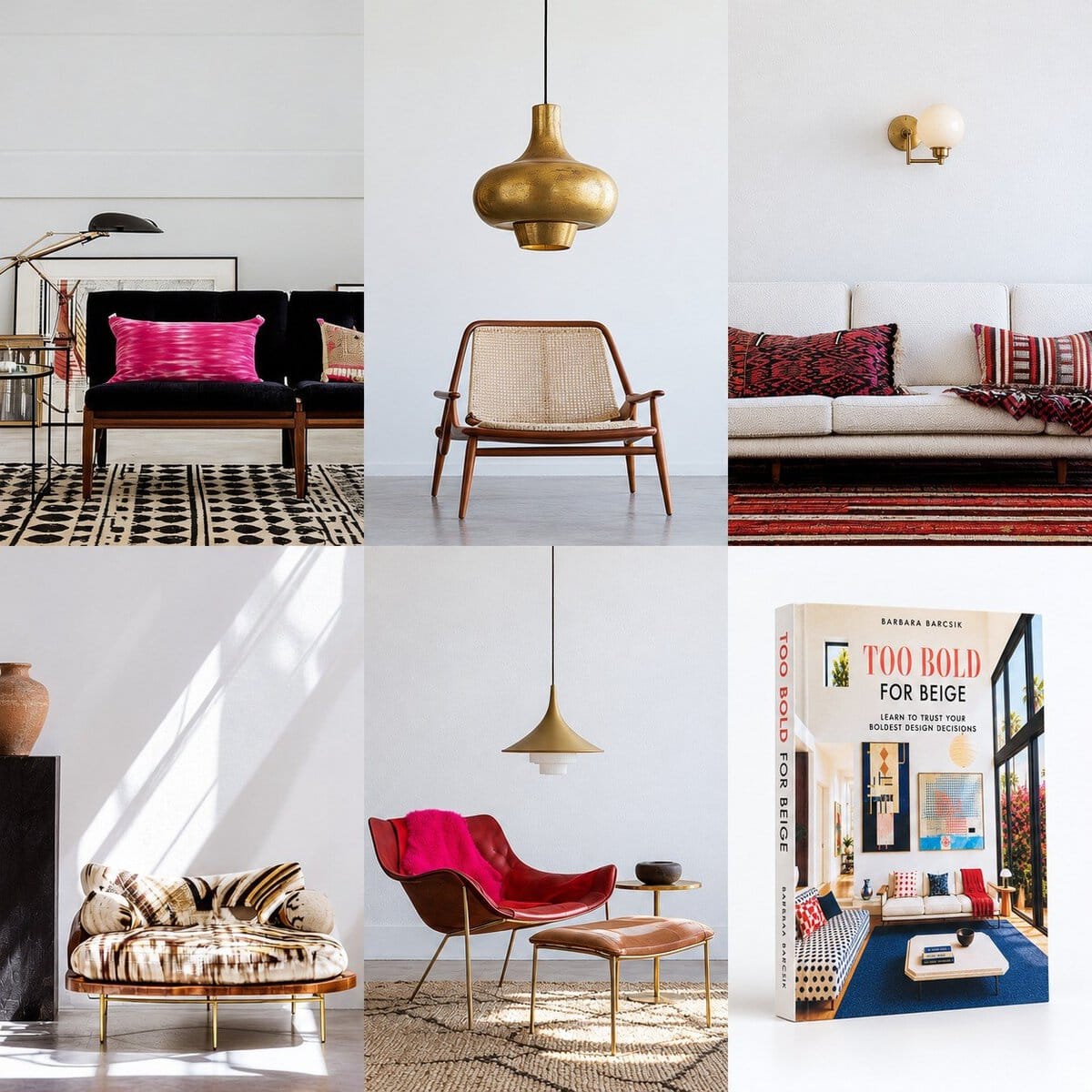
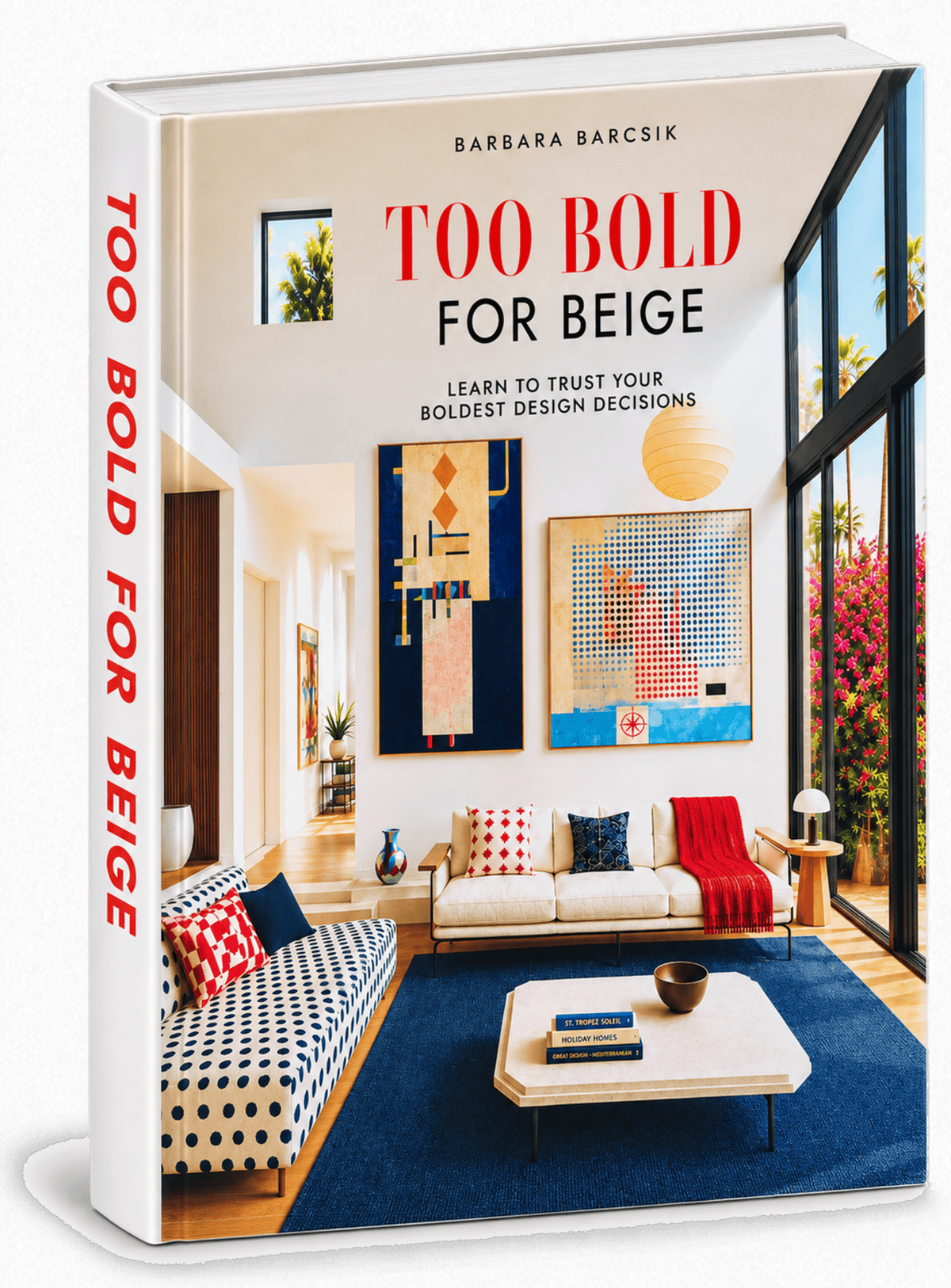
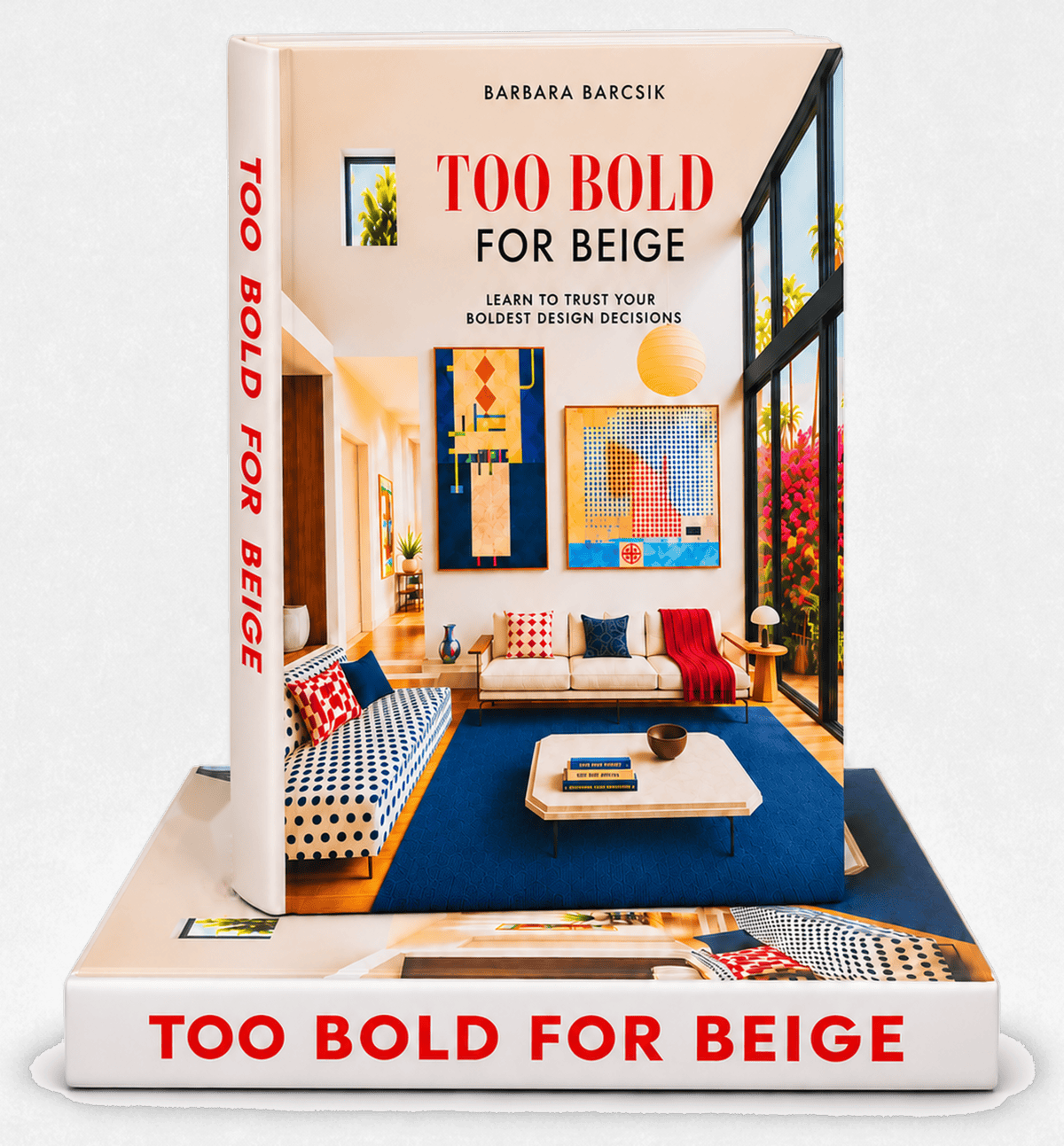
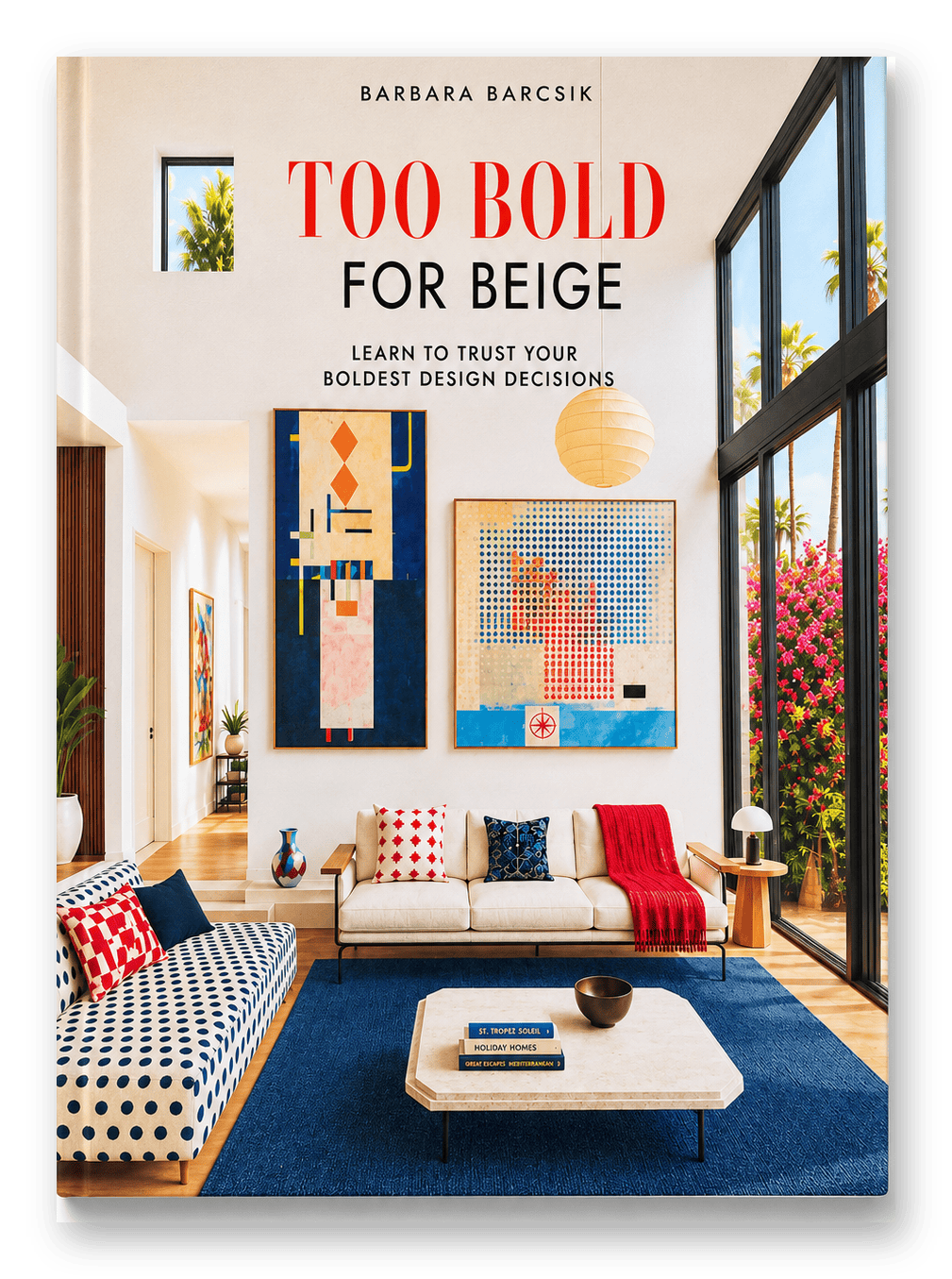
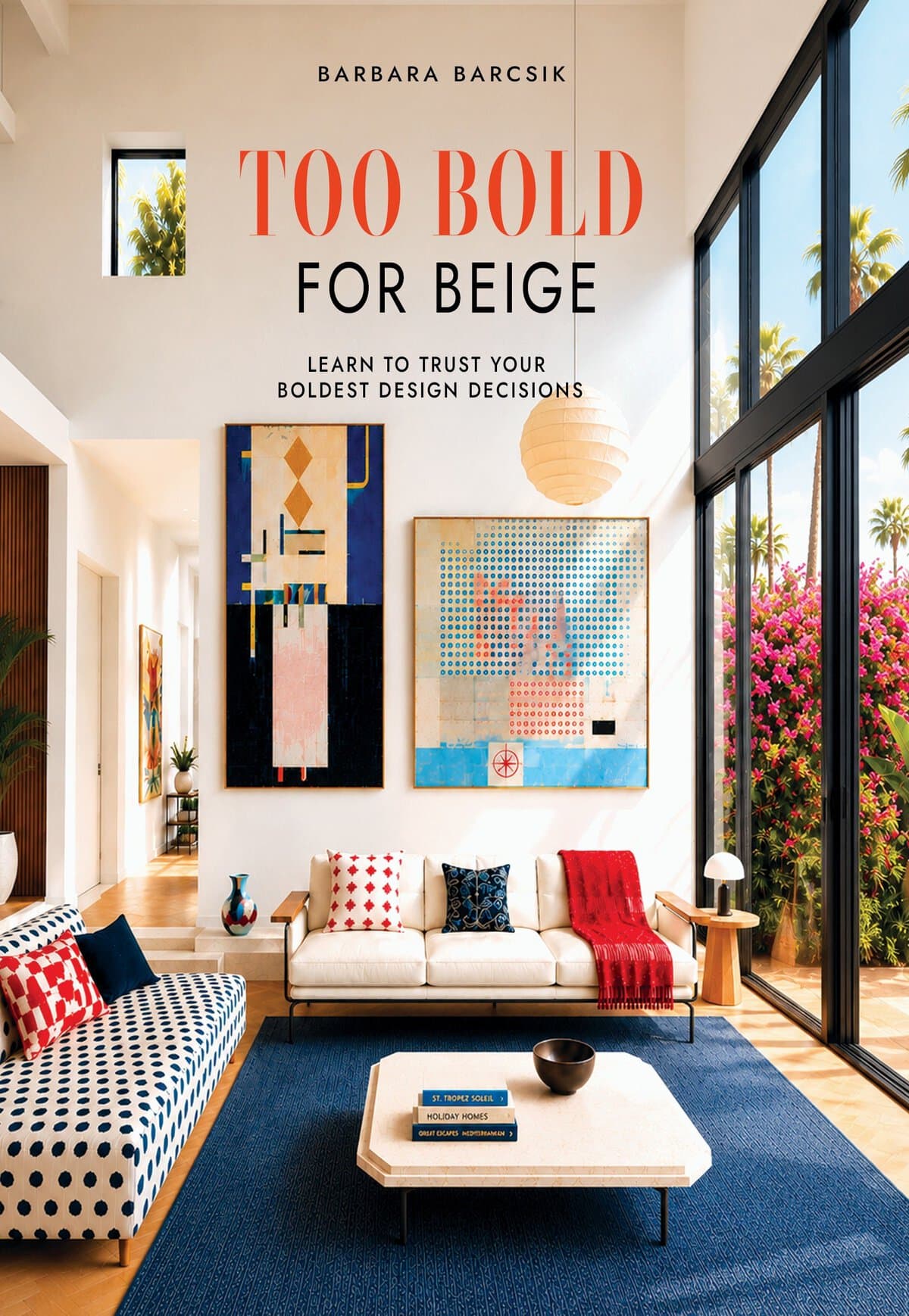
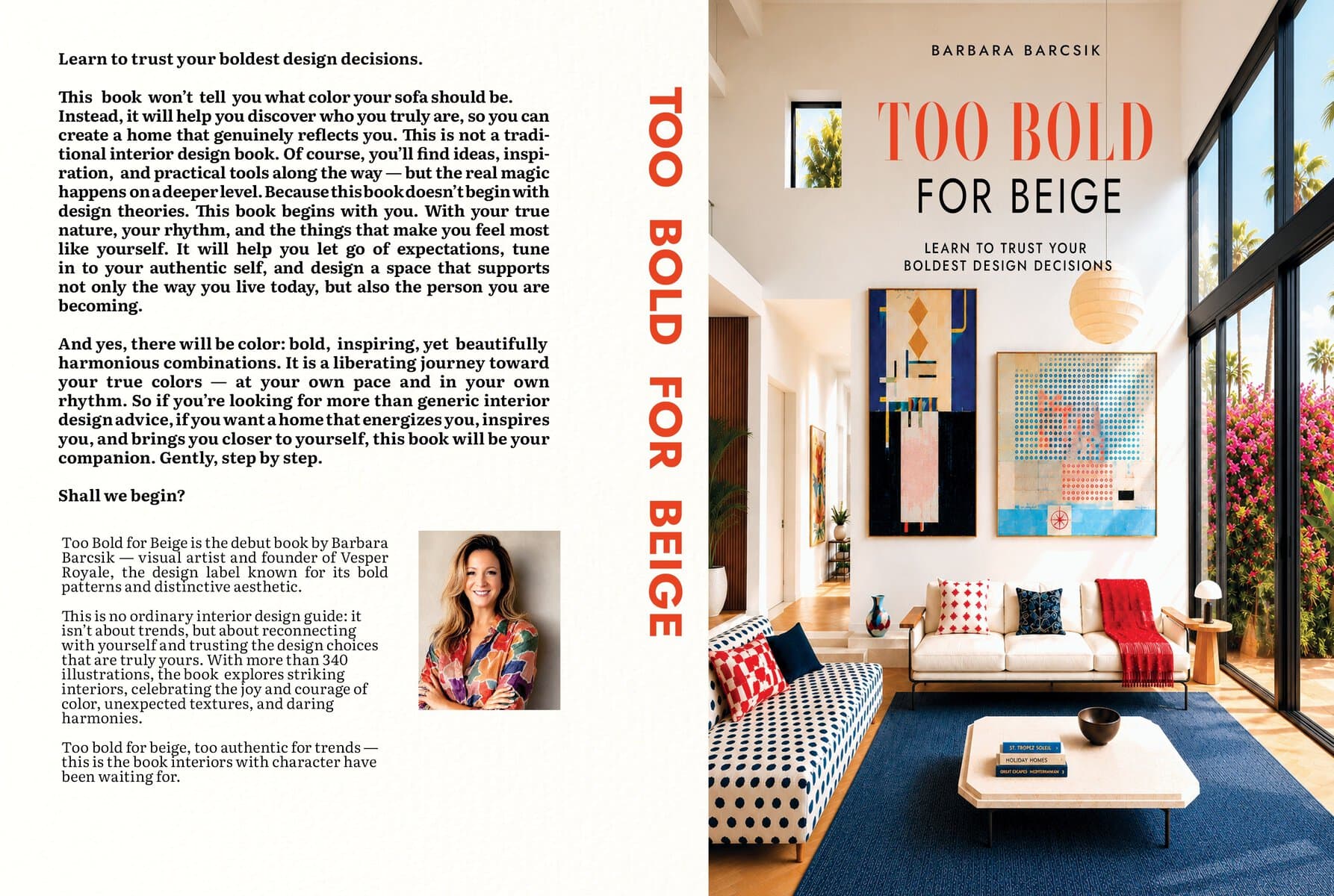
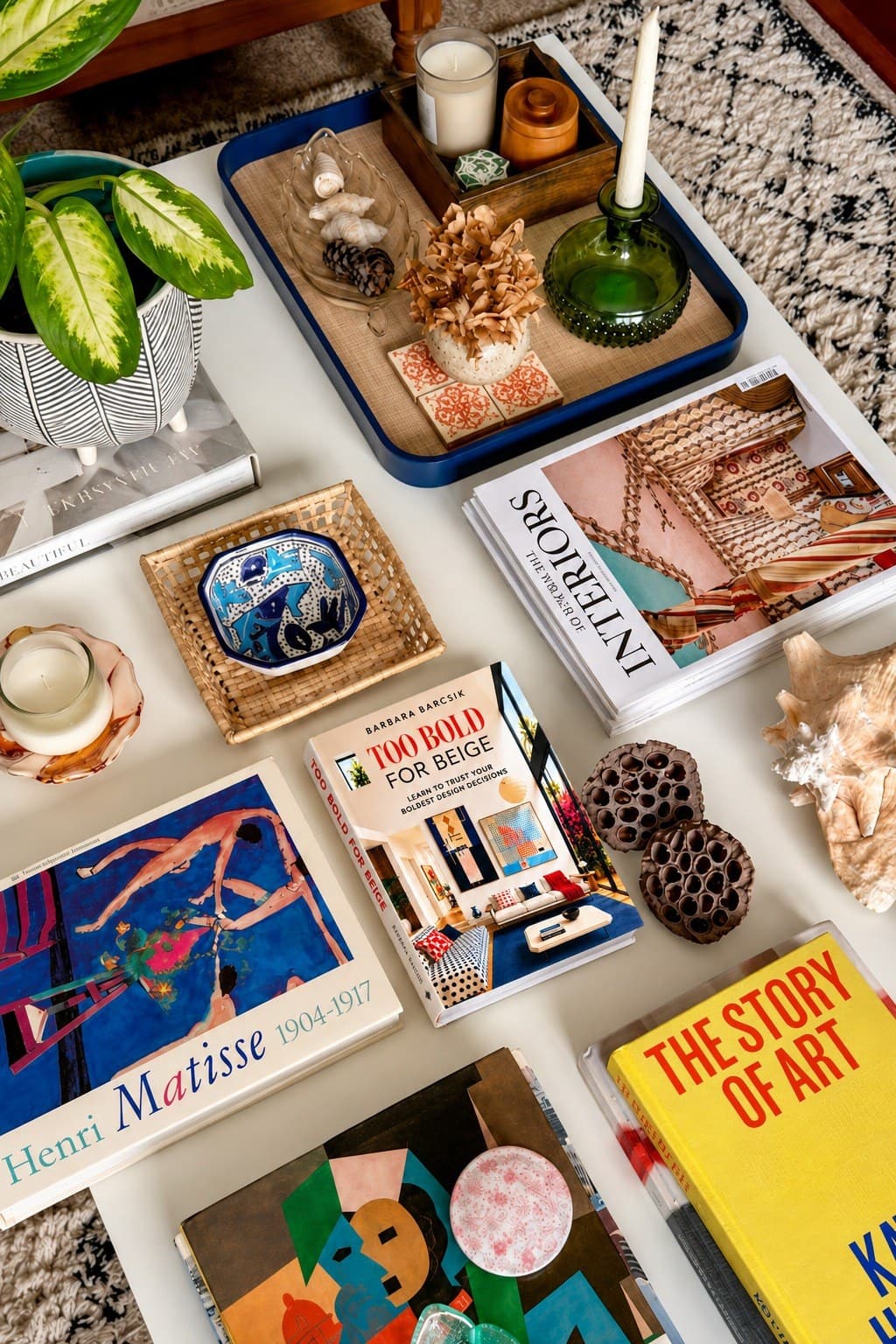
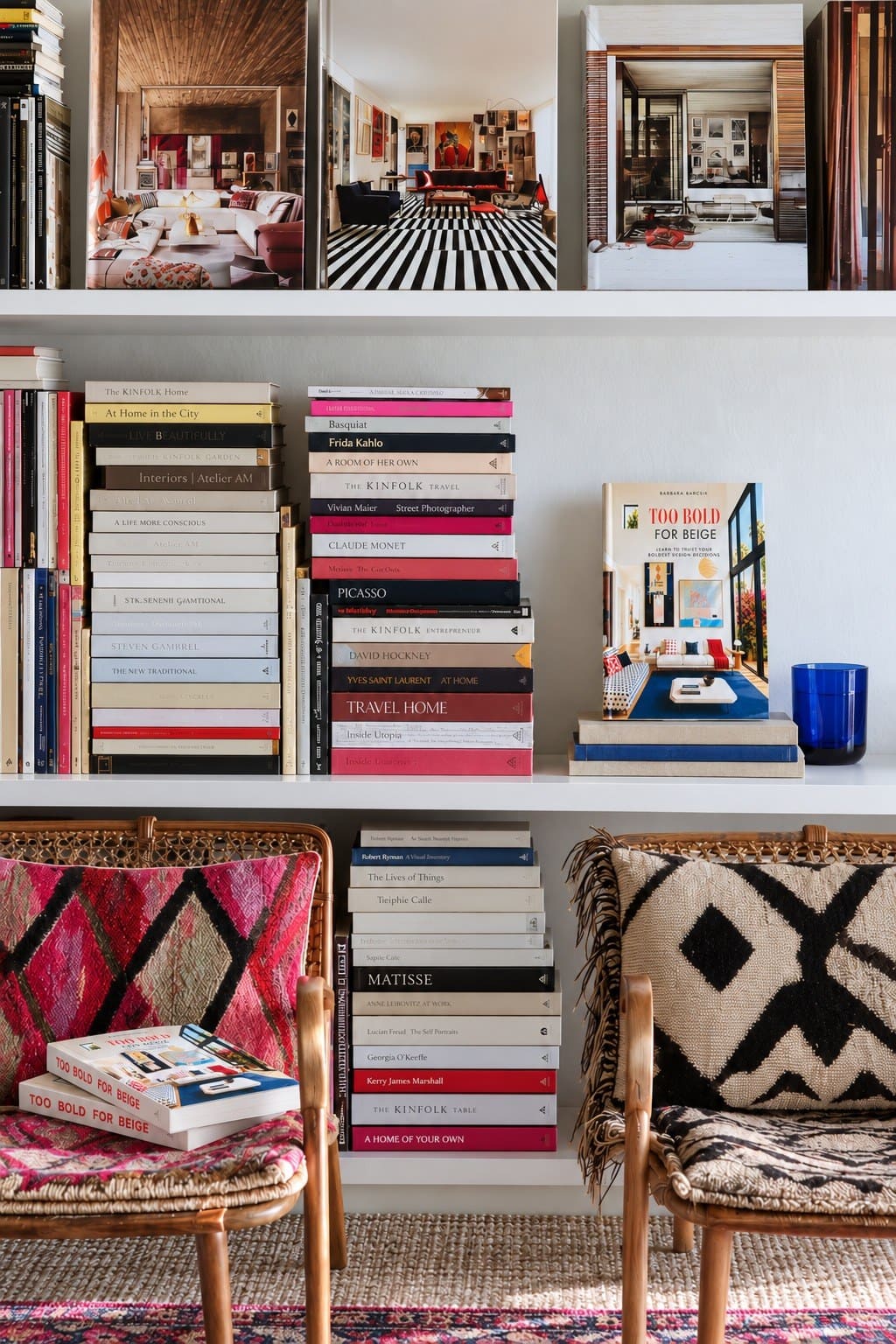
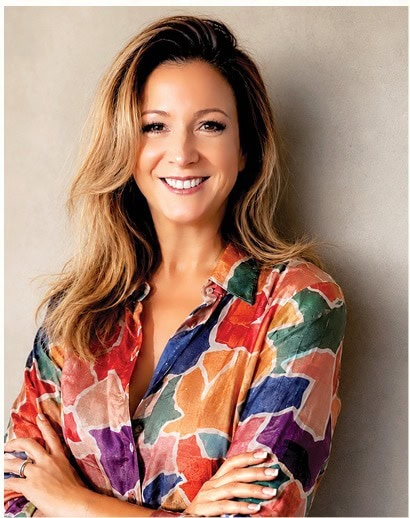
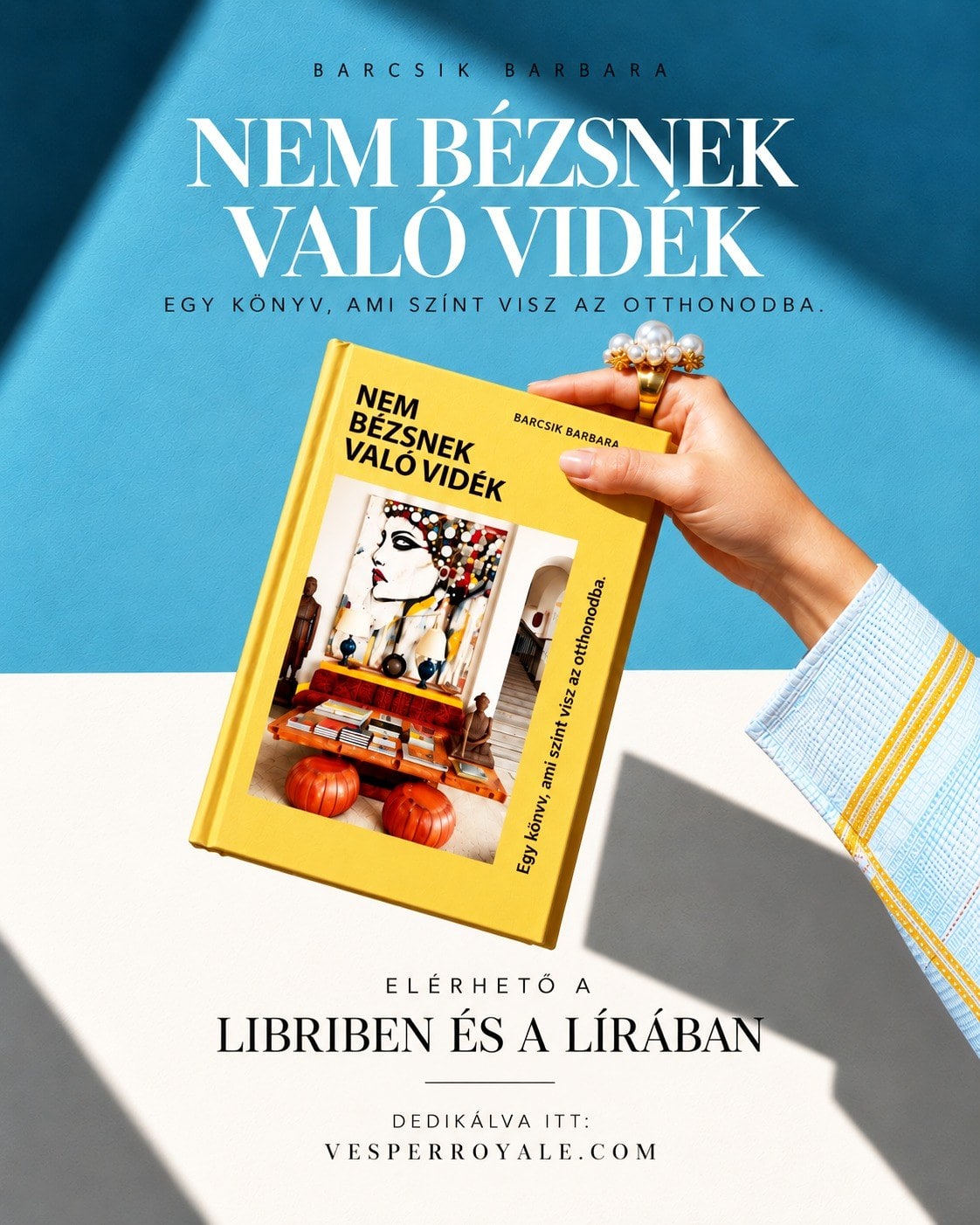
Free to use for editorial purposes with the credit © Vesper Royale.
Download all images (ZIP) ↓Read the book?
We'd love to hear what you think.
If you've read Too Bold for Beige, a few words of feedback would mean a great deal. Leave a review where you bought the book, or write to us directly. Thank you for reading.
