Designed at 350 × 280 cm · Printed to your exact wall size.
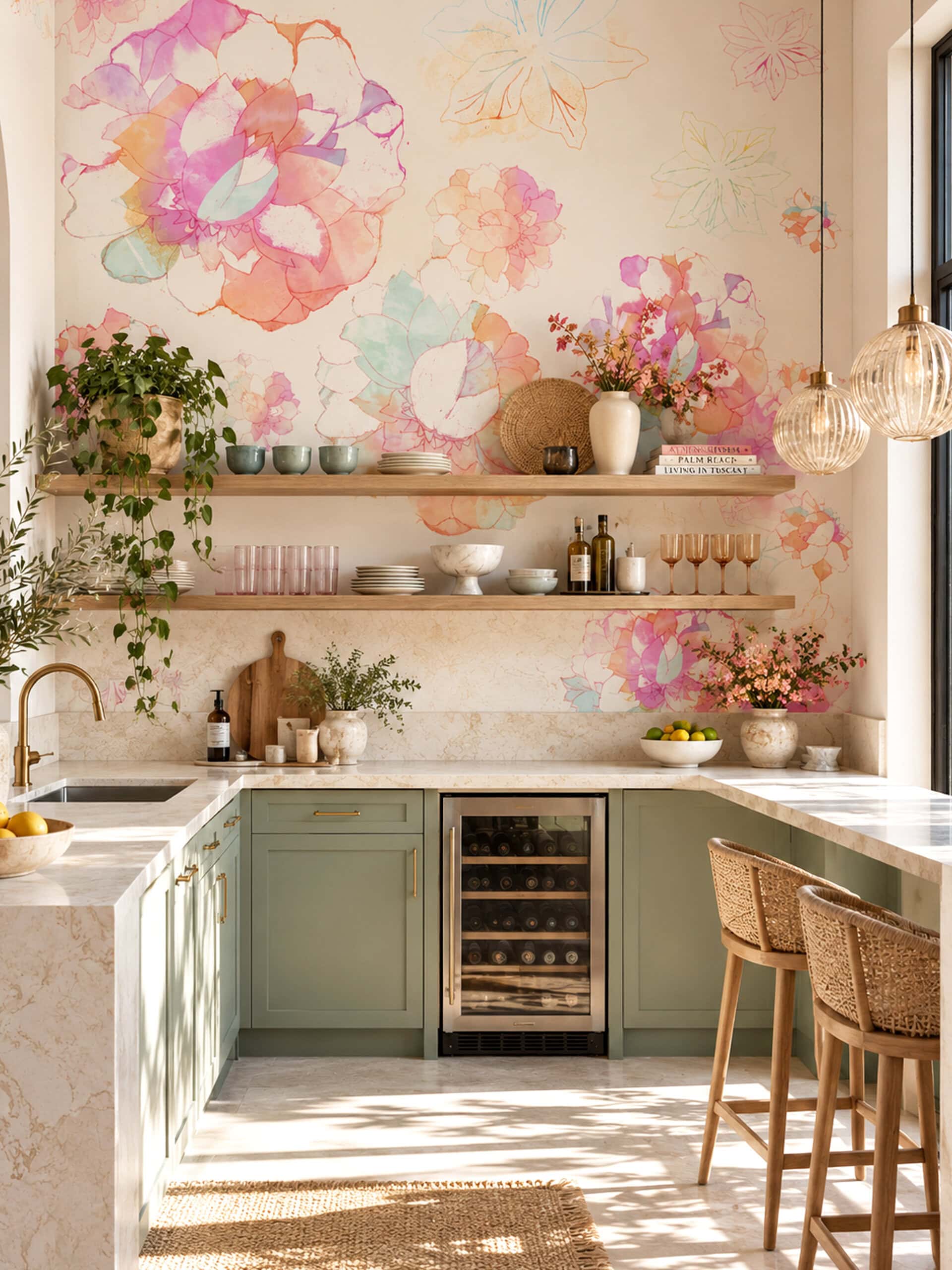
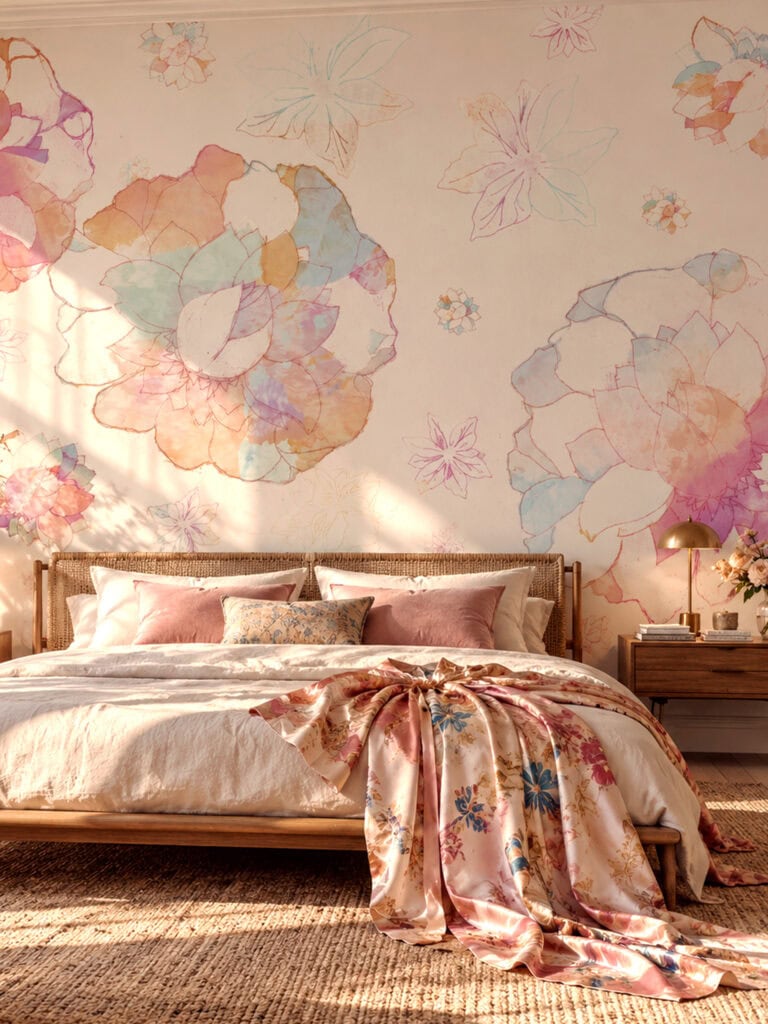
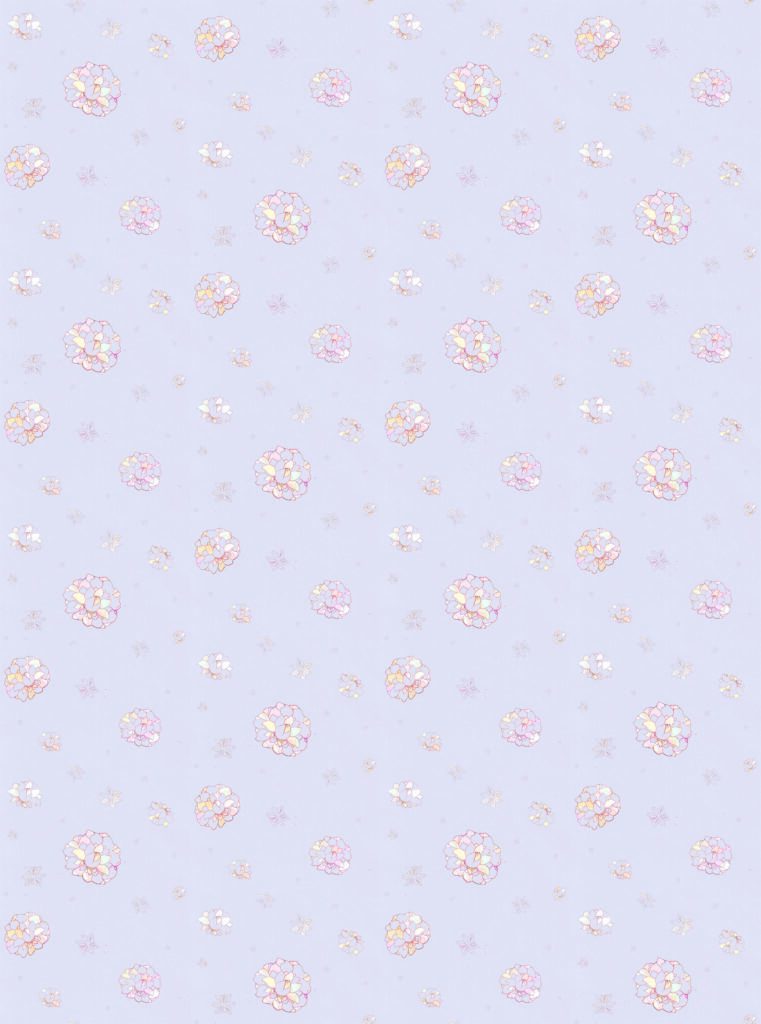
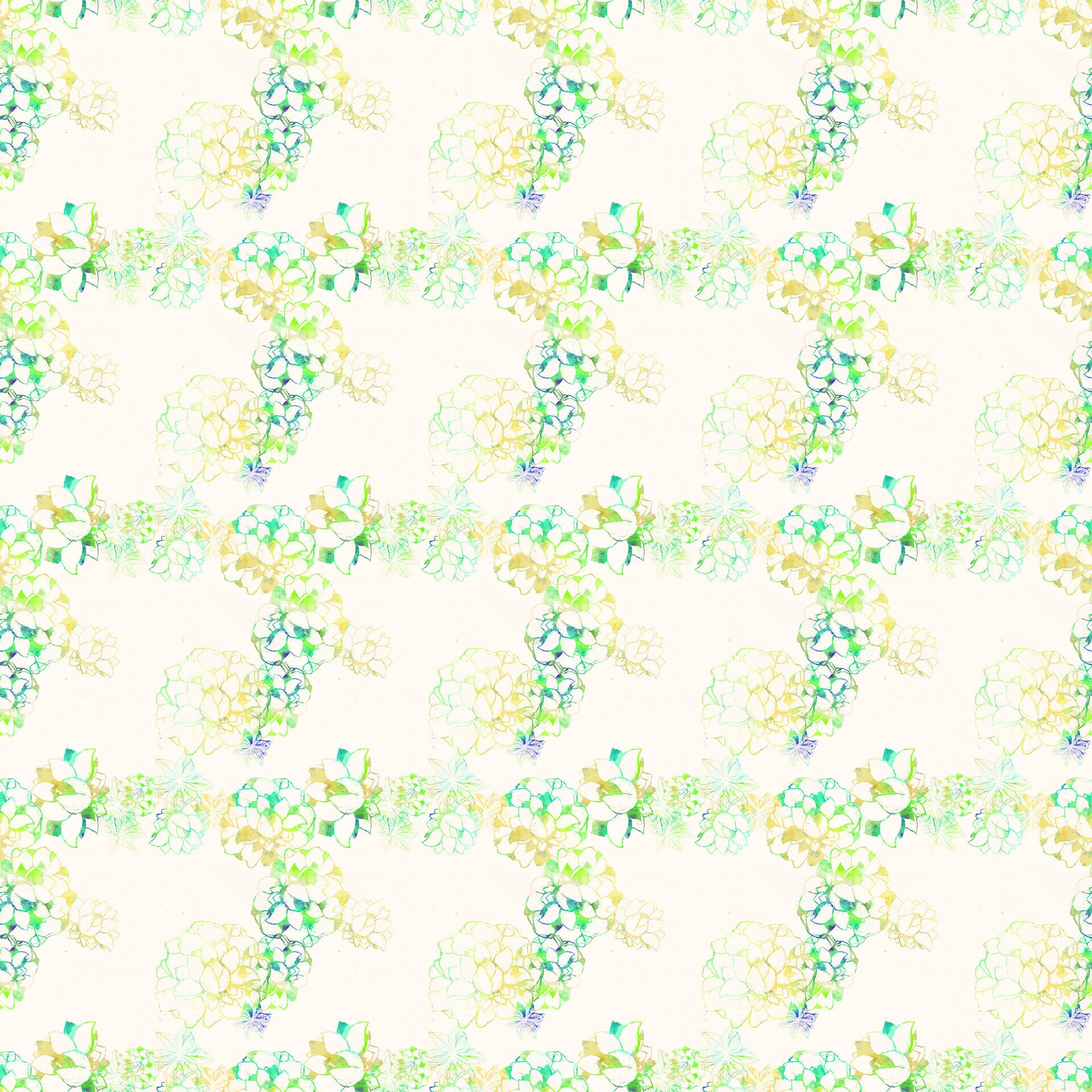
This pastel lotus wallpaper takes its cue from Japanese kimono design: the refinement of its floral motifs, the softness of its colour, the lightness of its composition and the fine, ink-drawn line that defines each petal. Oversized lotus blossoms in pink, peach, mint and lilac float across a warm cream ground, outlined as if with a brush and washed in watercolour. The questions below explore the traditions behind it: the lotus as a motif, the art of the kimono and the Western fascination with Japanese design.
What is pastel lotus wallpaper?
Pastel lotus wallpaper is a botanical wallcovering in which lotus blossoms, usually shown open and at a generous scale, are rendered in a soft, light palette of pinks, peaches, mints and lilacs. Contemporary designs often combine two techniques: transparent watercolour washes that give the petals depth and luminosity, and a fine contour line that holds each form together. When produced as a mural rather than a repeating pattern, a lotus design can work with the proportions of an entire wall. Individual blossoms can be placed with intention, leaving open space between them, so the composition reads less like wallpaper and more like a single, painted surface.
What does the lotus symbolise in Japanese art?
In Japanese art, the lotus is closely tied to Buddhism. According to The Metropolitan Museum of Art, the lotus is a Buddhist symbol of purity and perfection because it grows out of mud without being defiled. The museum notes that a pattern of lotus petals on water appears at least as early as the late Heian period, for example in the illustrated sutras presented by the Heike family to Itsukushima Shrine in 1164. The motif remained in use for centuries across painting, sculpture and textiles. An eighteenth-century Buddhist priest’s robe in The Met’s collection is woven with lotus petals on water in brocaded silk and metallic thread, showing how a sacred image could become a rich decorative surface.
For contemporary designers, the lotus carries this double inheritance: a flower of great symbolic weight, and a form whose open, layered petals lend themselves naturally to pattern.
How were kimono patterns designed and dyed?
One of the most important techniques in kimono decoration is yūzen, a form of paste-resist dyeing. As the Victoria and Albert Museum explains, the pattern is drawn on the cloth with rice paste squeezed through the metal tip of a cloth bag; the paste forms a protective layer that keeps the dye from penetrating, so each area of colour stays crisply contained within its outline. According to a curator at the Tokyo National Museum, the technique is associated with Miyazaki Yūzen, active in the late seventeenth and eighteenth centuries. Because the paste could be applied freehand, yūzen allowed kimono designers to draw with remarkable fluency. An eighteenth-century outer kimono in the V&A collection shows a delicate scene of flowers, birds and butterflies at the water’s edge, drawn in this way and enriched with touches of embroidery. The museum also notes that the second half of the eighteenth century saw a dramatic change in kimono design, as large, often singular motifs gave way to small-scale patterns scattered rhythmically across the whole surface.
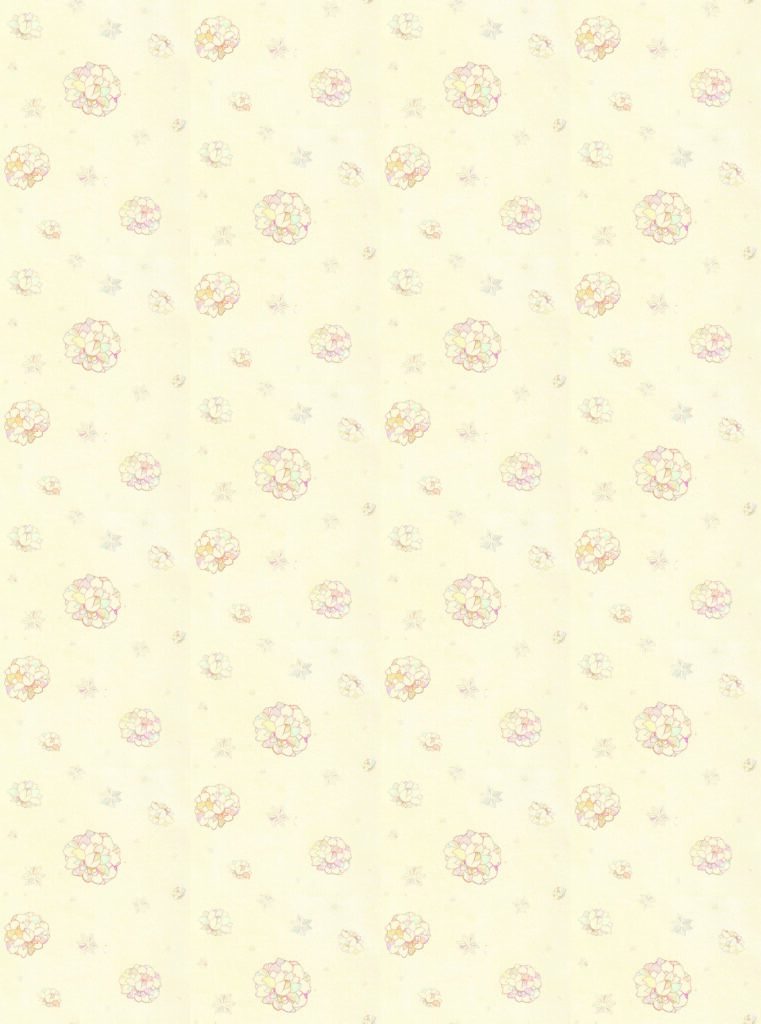
That choice between a few bold motifs and many small ones remains one of the central decisions in pattern design today, on cloth and on walls alike.
How did Japanese design influence Western interiors?
The influence came quickly once trade opened. As The Met describes, after Japanese ports reopened to trade with the West in 1853, fans, kimonos, lacquers, bronzes and silks began pouring into England and France, and Parisians saw their first formal exhibition of Japanese arts and crafts when Japan took a pavilion at the World’s Fair of 1867. The fascination that followed, known as Japonisme, reshaped Western art. Edgar Degas, for example, absorbed the qualities of Japanese design he found most sympathetic: asymmetrical compositions, spaces emptied of all but abstract elements of colour and line, and a focus on singular decorative motifs.
Those same principles translate well into interiors. Asymmetry gives a room movement, generous empty space lets a motif breathe, and a single dominant image can anchor a wall more effectively than many competing ones.
How do you style a large-scale floral mural?
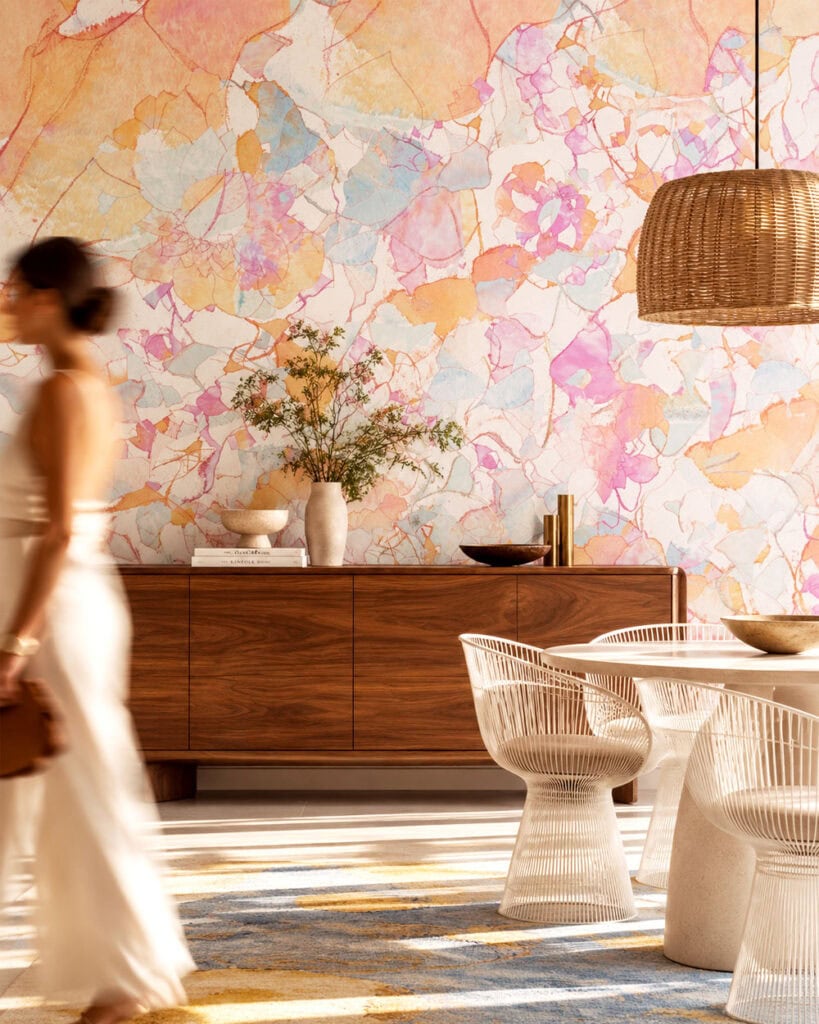
A large floral mural works best as the one dominant pattern in a room. Natural, quietly textured materials such as rattan, linen, light oak, jute and pale stone let the colours lead, while one or two accents drawn from the mural, a blush cushion, a sage cabinet or a brass lamp, tie the scheme together. Scale and placement matter more than with small repeats. Before choosing a wall, consider where furniture will stand: the most striking blooms should remain visible above a headboard, sofa or kitchen counter rather than disappearing behind them. Large pastel florals suit bedrooms, kitchens with open shelving and dining rooms, and they are equally at home in cafés, restaurants and boutique hotels, where a single expansive wall can define the character of the whole space.





Értékelések
Még nincsenek értékelések.